What a RAG chatbot actually is
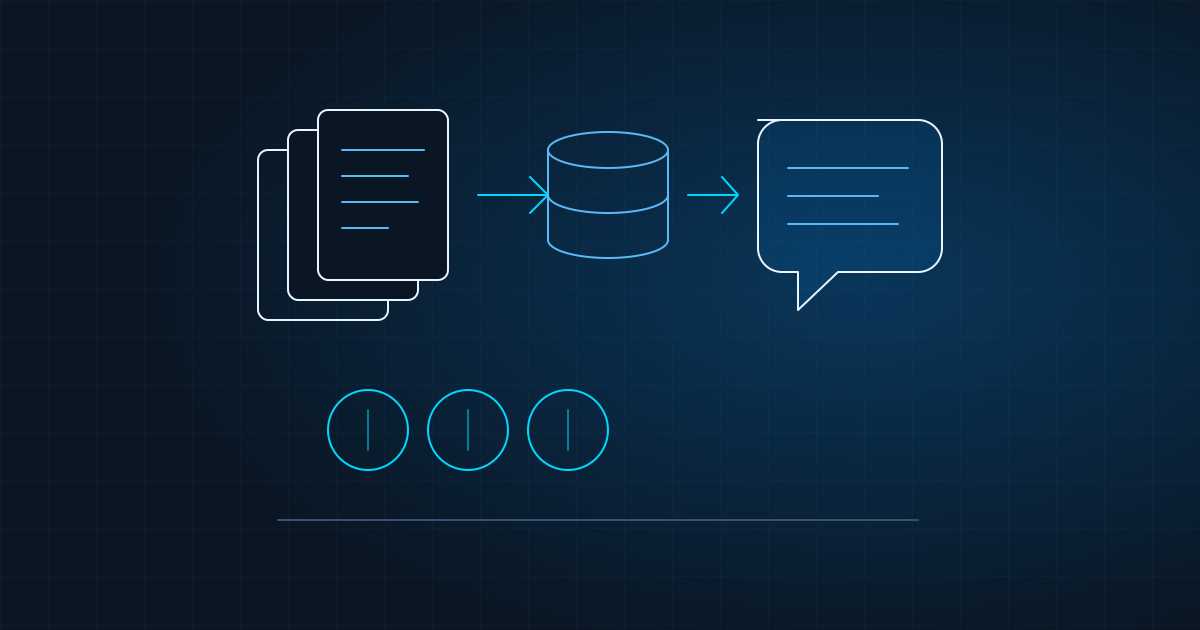
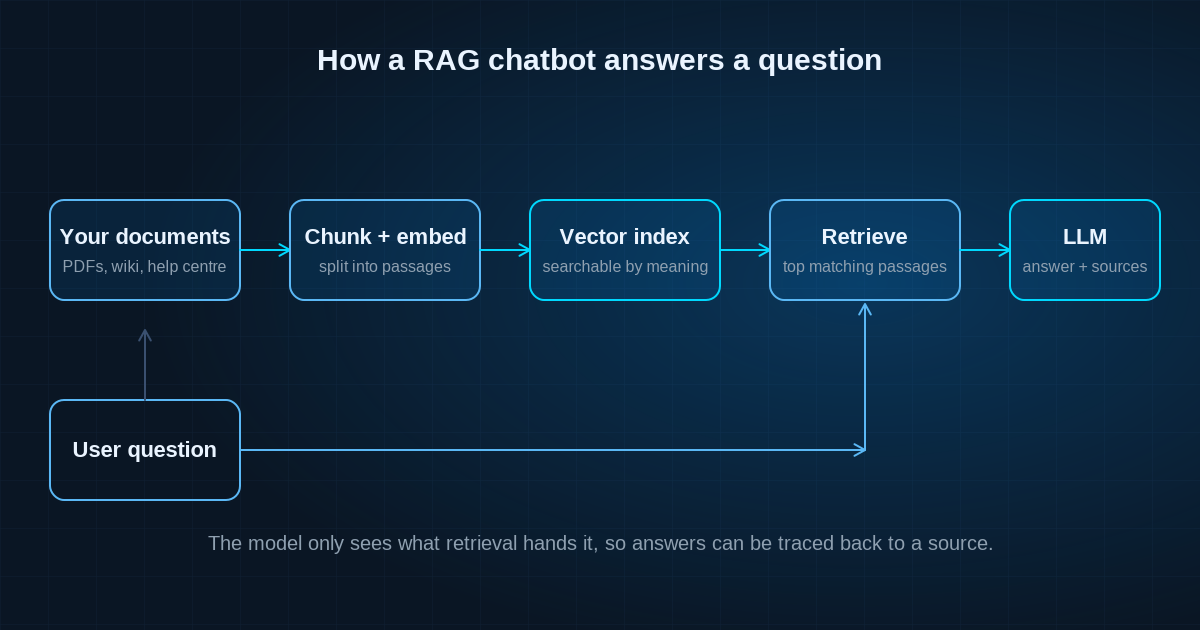
A retrieval-augmented generation (RAG) chatbot answers questions using your own material instead of only what a language model learned in training. When someone asks a question, the system first searches your documents for the most relevant passages, then hands those passages to the model and asks it to answer from them.
That one idea is why RAG is popular for support, internal knowledge bases and product documentation: answers stay tied to sources you control, and updating the bot usually means updating the documents, not retraining anything. It is also why the cost question has no single answer. The price depends on how much work it takes to make your material searchable, and how well you need the answers to hold up.
The five things that drive cost
Almost every RAG budget is a mix of the same five line items. Knowing them lets you compare quotes that look very different on the surface.
- Data preparation. Cleaning, structuring and splitting documents into passages. Messy PDFs, scanned pages, duplicated policies and out-of-date pages are the most common reason projects run long.
- Retrieval quality. Choosing how content is chunked and indexed, whether to add keyword search alongside meaning-based search, and tuning what gets passed to the model. This is where answer quality is won or lost.
- Evaluation. Building a set of real questions with known good answers so you can measure the bot instead of guessing. It is easy to skip and expensive to skip.
- Hosting and infrastructure. A place to run the app, a search index or vector store, logging, and access control if the content is private.
- Model API usage. What you pay the model provider each time someone asks a question. This is the only cost that scales directly with usage.
One-off build cost versus ongoing run cost
Think of the budget in two parts. The build covers data preparation, retrieval design, the chat interface, integration with your systems and evaluation. It is mostly people's time and it is largely a one-off, although content that changes often will need ongoing upkeep.
The run cost is hosting, the search index, monitoring and model usage. For a small internal bot it can be modest. For a public bot with heavy traffic, model usage can become the largest line, which is why it is worth estimating before launch rather than after the first invoice.
How to estimate your model usage
Model providers price by tokens, which are small chunks of text. For a rough monthly estimate, multiply the number of conversations by the average tokens sent to the model per question (the question, the retrieved passages and any instructions) plus the tokens in the answer, then apply the provider's current price per token. Prices change, so use the provider's own pricing page rather than a figure from an article.
Two levers move this number more than most people expect. Sending fewer, better-chosen passages reduces the input size on every question. And not every question needs the largest model: routing simple questions to a smaller, cheaper model can cut cost without users noticing.
Where projects overspend
The expensive surprises are rarely the model bill. They tend to come from discovering late that the source documents are inconsistent, building features nobody asked for before the core answers are reliable, and having no way to measure quality so every change becomes an argument.
- Start with one narrow, high-value use case and a small set of trusted documents, then widen.
- Write down 30 to 50 real questions with the right answers before building, and test against them throughout.
- Decide who owns the content. A bot is only as current as its documents.
What to ask a vendor before you sign
Whether you work with an agency or build in-house, these questions separate a clear estimate from a vague one. If you would like a second opinion on a proposal, our AI and LLM integration work starts with exactly this kind of scoping, and you can get in touch with the documents you plan to use.
- How will you measure answer quality, and can I see the test questions?
- What happens when the bot does not know? Does it say so, or guess?
- Which costs are fixed and which grow with usage, and what is a reasonable monthly estimate at my expected volume?
- Where is my data stored and who can see it?
- What does it take to update the content after launch?
Frequently asked questions.
- Is a RAG chatbot cheaper than fine-tuning a model?
- Often it is cheaper to start and easier to keep current, because updating the documents does not require retraining. Which is cheaper overall depends on your content, your volume and how much consistent style or behaviour you need. We compare the two in RAG vs fine-tuning: when to use which.
- Do I need a dedicated vector database?
- Not always. For a small collection of documents, a search extension on a database you already run can be enough. A dedicated vector store becomes worthwhile as the collection and traffic grow. Choose based on volume and operations, not fashion.
- What is the biggest hidden cost in a RAG project?
- Preparing the source material. If documents are scattered, duplicated or out of date, the bot will repeat those problems confidently. Time spent cleaning content is usually the best-value part of the budget.