Who this comparison is for
This is for business owners and marketing leads deciding how to build or rebuild a company website, not for developers choosing a framework for fun. The honest answer to "which is better" is "it depends on what the site needs to do", so the aim here is to give you the questions that decide it.
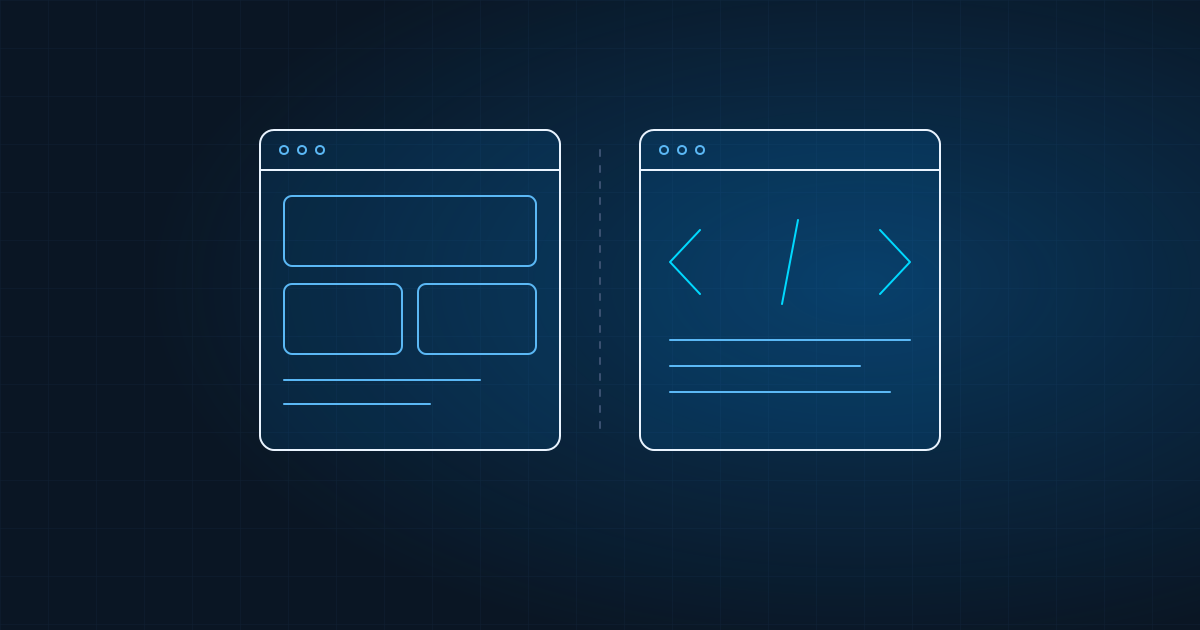
WordPress is a content management system that powers a large share of the web. Next.js is a React framework developers use to build custom sites and web applications. They solve overlapping problems in different ways, and both can produce excellent results.
Editing and content workflow
WordPress's biggest strength is that non-technical people can publish, edit and reorganise pages without a developer, with a huge ecosystem of themes and plugins for common needs. If your team will edit the site daily, that matters a great deal.
A custom Next.js site can offer the same editing experience by pairing it with a content management system, but that is a deliberate design decision rather than something you get for free. Without one, content changes go through a developer. Ask any vendor exactly how your team will edit pages after launch.
Performance, security and maintenance
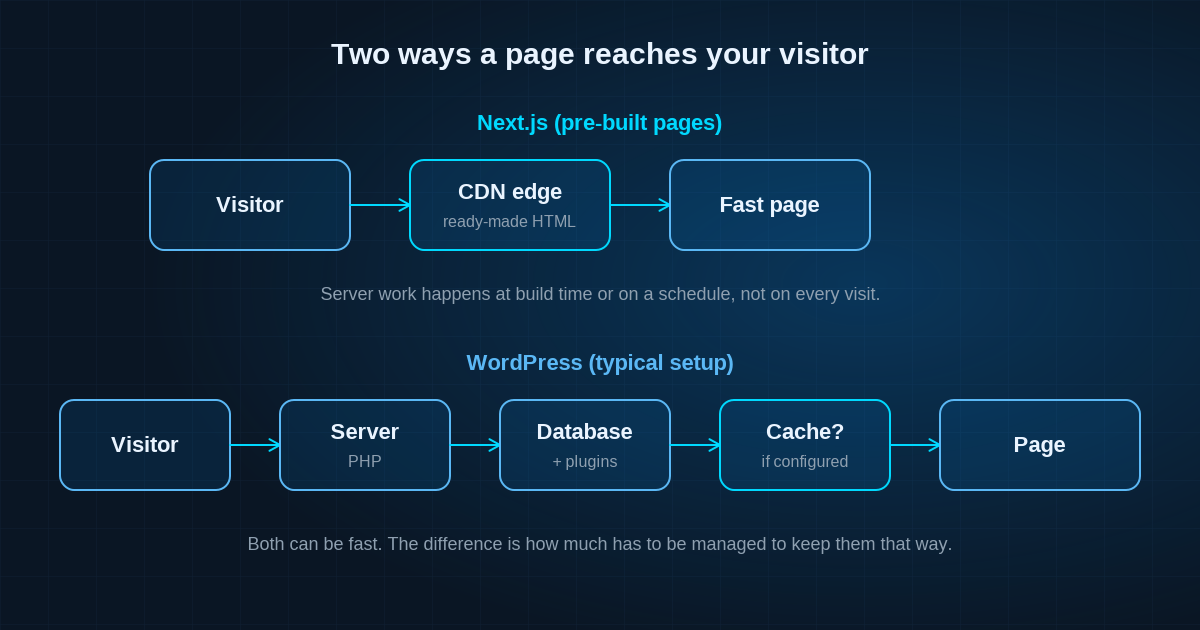
A typical WordPress page is assembled on a server from a database and plugins each time it is requested, unless caching is set up well. A Next.js site can serve pages that were prepared in advance from a content delivery network, which tends to make fast loading the default rather than something to configure. That said, a well-built WordPress site with good hosting and caching can be fast, and a careless Next.js site can be slow.
Maintenance is where the two differ most in practice. WordPress needs core, theme and plugin updates, and plugins are the most common source of security issues and conflicts. A custom site has far fewer moving parts to patch, but it depends on developers for changes and upgrades.
Thinking about cost over three years
Compare total cost of ownership rather than the launch price. For WordPress, count the theme or build, premium plugin licences, hosting that is good enough, and ongoing updates and security. For a custom site, count the design and build, hosting, a content system if you need one, and developer time for changes. The cheaper option at launch is not always the cheaper one in year three, and which wins depends on how much your site changes and how much custom behaviour it needs.
When WordPress is the right answer
Choose WordPress when the site is mostly pages and posts, your team needs to edit freely, the budget is tight, and standard plugins cover what you need. Many brochure sites, blogs and small shops are exactly this, and a custom build would be over-engineering.
Choose a custom Next.js site when you need unusual functionality, tight integration with other systems, a product-like experience, strict performance targets, or a design that should not be limited by a theme. If you are weighing it up, our web platform engineering and performance work covers both sides of this decision.
A simple decision checklist
Answer these honestly before you choose.
- Will non-technical staff edit the site every week? If yes, make sure the editing story is excellent either way.
- Does the site need custom logic, integrations or app-like features? If yes, lean custom.
- Is the budget for build and upkeep tight? If yes, lean WordPress with disciplined plugin choices.
- Are page speed and Core Web Vitals a hard business requirement? Plan for it explicitly on either platform.
- Who will maintain it in two years? Choose the option that person can actually support.
Frequently asked questions.
- Is Next.js better than WordPress for SEO?
- Neither is inherently better. Search engines can rank both. What helps SEO is fast pages, clean structure, good content and correct metadata, all of which are achievable on either. Next.js makes some performance and technical SEO practices easier to build in, while WordPress has mature SEO plugins.
- Can I use WordPress as a content editor with a Next.js front end?
- Yes. This is called a headless setup: WordPress manages the content and a Next.js site displays it. It combines familiar editing with a custom front end, at the cost of more moving parts to run.
- Is a custom site always more expensive than WordPress?
- Usually more at launch, but not always over several years, because it depends on plugin licences, maintenance, and how much custom work you need. Compare total cost of ownership, not just the first invoice.